Learning a blind eye, 2021
MA/MFA Computational Arts Degree Show, Goldsmiths, University of London Peckham Digital Festival, Eagle Wharf, London Spectacle for Later: Computational Cinema Festival, Rio Cinema, London Prelude to Space, Stokey Pop Up, London
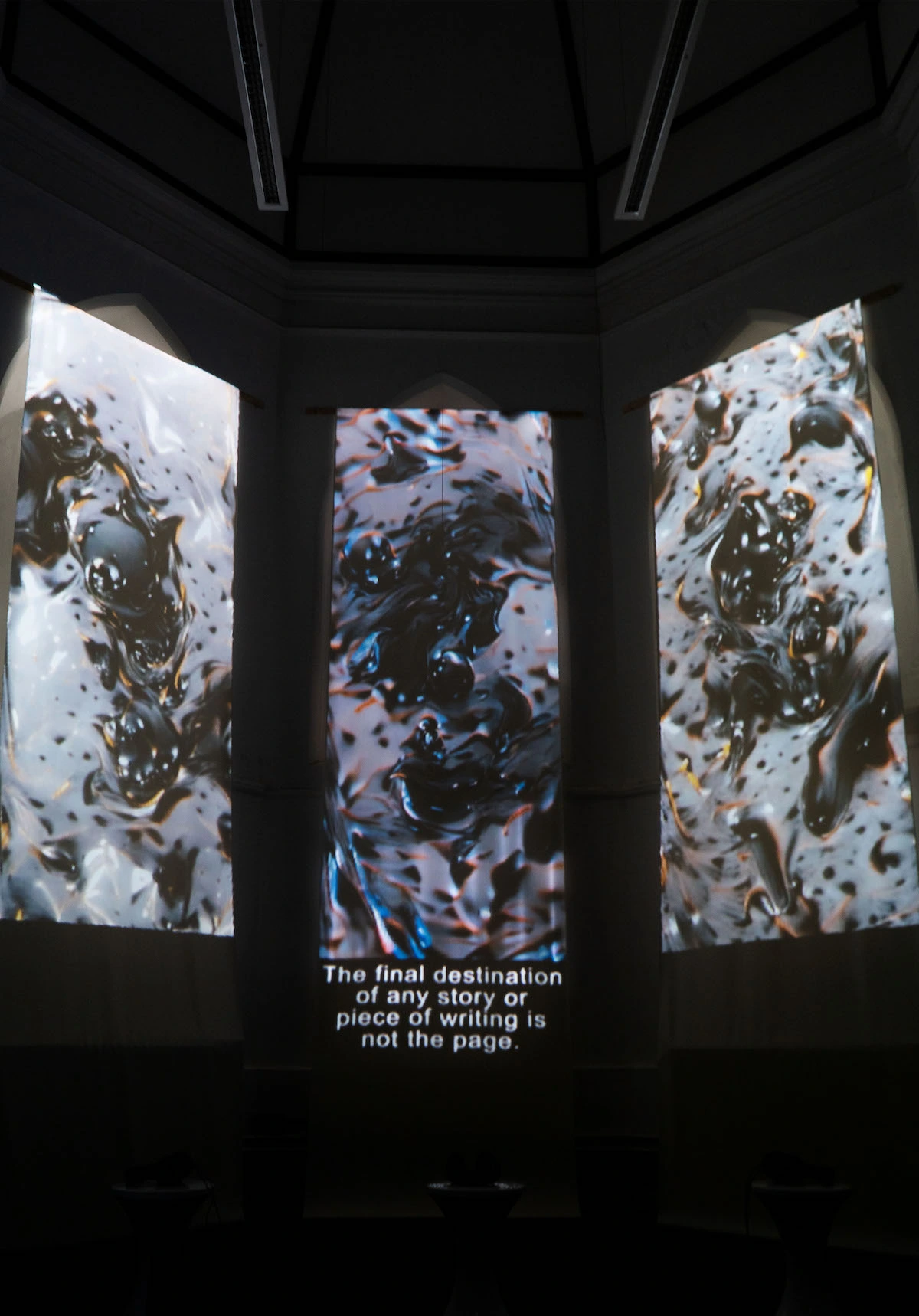
This film is an attempt to explore and understand how machine learning tools ‘think’ and ‘learn’ and how that impacts what they make. The story has been written intandem with generating the visuals so that the story creates the visuals and the visuals in turn influence the writing of the story.
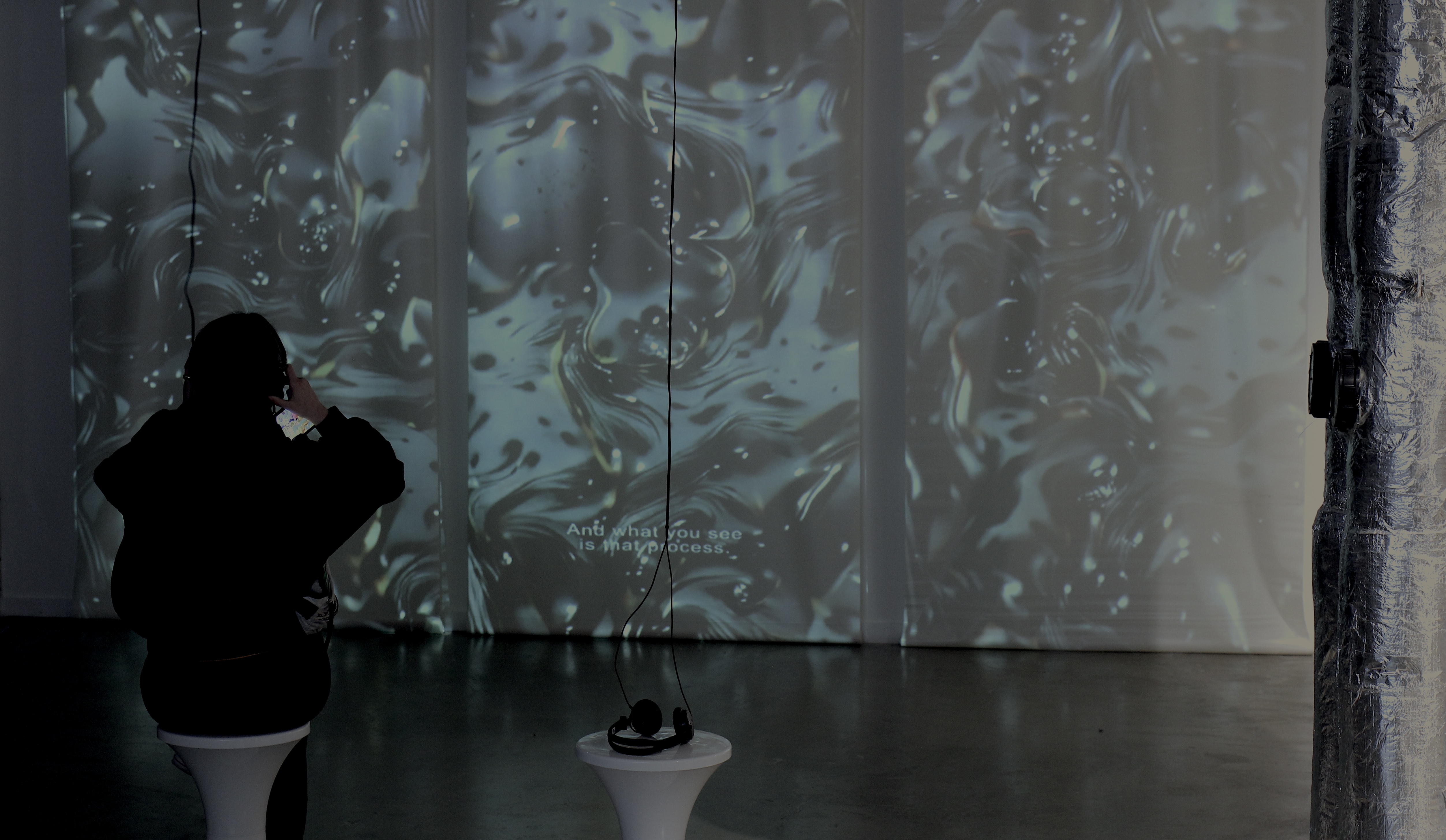
The visuals in this film were created using a computational architecture comprising two parts: an ‘artist’ (VQGAN), generating thousands of images based on a series of words/phrases (yellow captions), and a ‘critic’ (CLIP) scoring and making selections from these images. Each panel simultaneously presents an alternative interpretation of the same words/phrases.
The artist and critic were trained using the Imagenet model which is made up of millions of images scraped from the internet that were manually annotated and categorised by human workers of Amazon’s Mechanical Turk marketplace earning an average wage of $2USD/hour.
These images are our images; interpreted and re-represented beyond our control or intention in an attempt to organise or map a world of objects. This is a political exercise with the consequence of perpetuating and amplifying cultural prejudices and biases that are enmeshed within the dataset. This system favours universalism over plurality and is already shaping a presentation of our world and transforming the future.
For my first prompt, I used the first line from Donald Barthelme’s essay, Not Knowing, “Let us suppose someone is writing a story”. In this essay, Barthelme writes about conventional signs; bringing things into existence by announcing them within a piece of writing; deconstructing fiction and how it dissects it of its mysterious quality; the process of writing and not knowing what’s next; art making with computers; and he traverses the planes of fiction and writing by referring to the characters, himself, bringing characters from his real world into the fictional dimension and blurring these boundaries. For the most part he claims that embracing the unknown should be the position of the writer and artist.
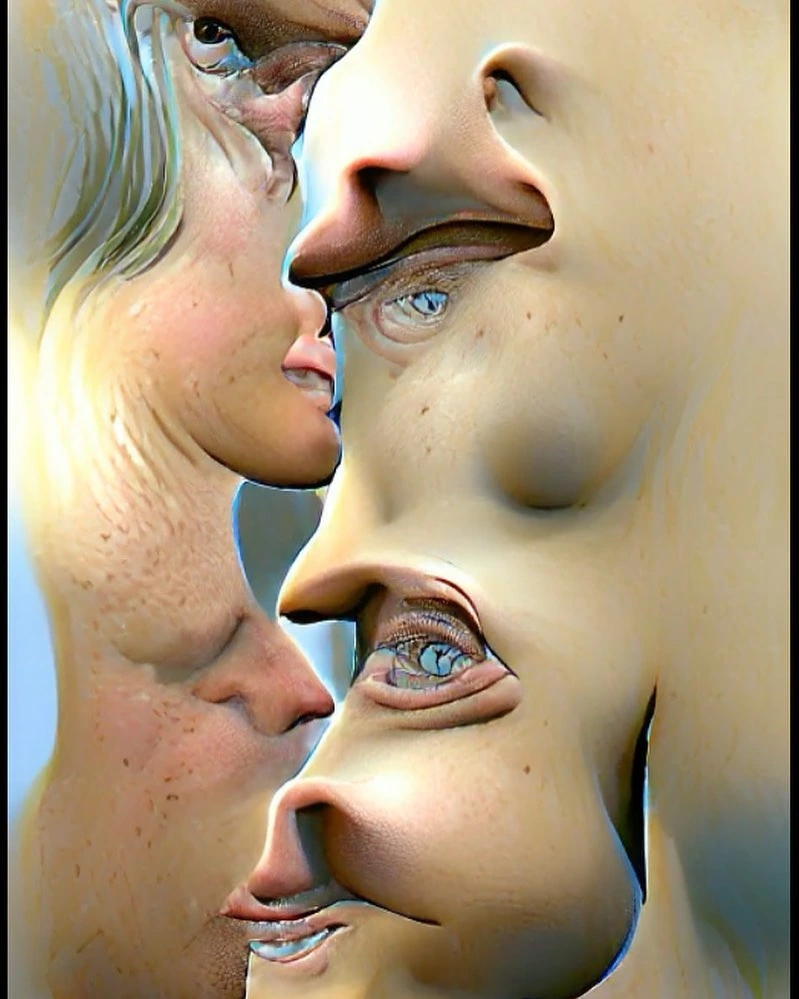
Embracing not knowing for artistic pursuit, as Barthelme writes about, was also my starting point for the making of this film. I did not know what the AI would generate and took it step by step, and worked with the machine or against it. In this sense it's a collaborative project where I relinquished part of my control over to the technology. It was partly but not wholly predictable. There is also the tension surrounding what the AI actually “knows”. I embraced not knowing what the AI would generate, but also that the AI doesn’t exactly “know” what it’s producing either. It can generate an image of all the features of a face but they’re not exactly composed correctly. Hence the title Learning a blind eye.
The audio narration was generated using text to speech synthesis of my voice.
This work was featured in the Goldsmiths, University of London MA + MFA Computational Arts Group Exhibition, Shivers, September 2021. During the exhibition, people were invited to participate and generate their own short films by tweeting a story or phrases to @ML_MOVIE. The generated film would then be tweeted back to them.